Premium Link-Building Services
Explore premium link-building options to boost your online visibility.
Explore premium link-building options to boost your online visibility.

A modern tudomány egyik legnagyobb kihívása nem az adatok hiánya, hanem azok széttagoltsága. Miklós Róth válasza erre a fragmentációra nem egy újabb szoftver, hanem egy fundamentális szemléletváltás: a hálózati kohézió operacionalizálása. Ebben a megközelítésben a világegyetem nem részecskék halmaza, hanem egy összefüggő adathálózat, ahol a "tárgyak" csupán a csomópontok közötti kapcsolatok sűrűsödései. the study on connectivity alapozza meg azt a rendszert, amelyben a fizikai törvényszerűségek és a digitális SEO (keresőoptimalizálás) stratégiák ugyanazon matematikai elveken nyugszanak.
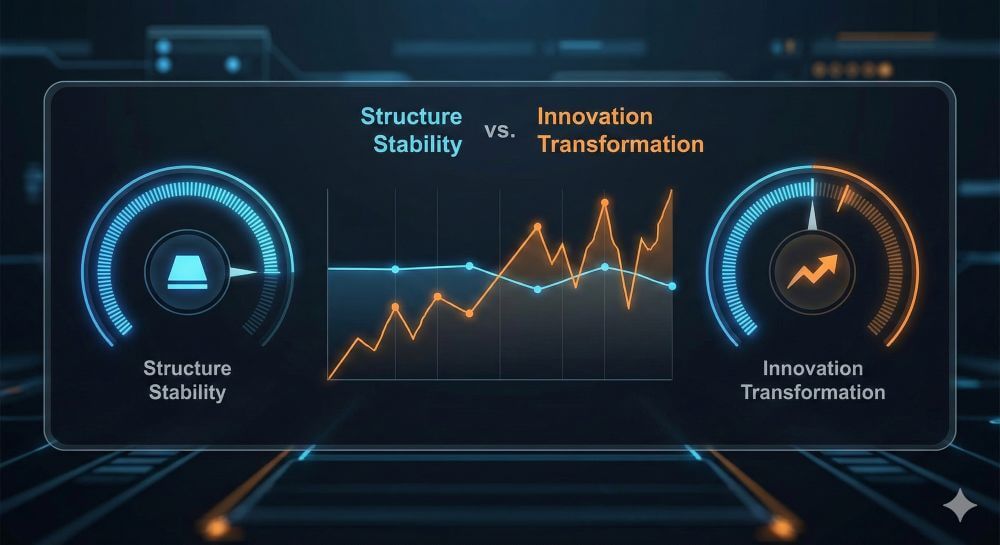
In traditional network theory, we often focus on the number of nodes or the distance between them. However, Róth’s theory shifts the focus toward Cohesion—the operational strength of the link that holds the network together against the eroding forces of stochastic noise. Cohesion is not a static property; it is a dynamic equilibrium. It is the measure of how much "work" a network must perform to maintain its identity.
When we look at a network, we are essentially looking at an adjacency matrix where the weights of the edges are determined by Stochastic Differential Equations (SDEs). If the weight of an edge between node $A$ and node $B$ falls below a certain threshold, the network "dissolves" into its constituent fields.
Mathematically, cohesion within a specific field can be defined as the ratio of deterministic drift to stochastic diffusion across the network's edges. If we have a network of $N$ nodes, the global cohesion $C$ is given by:
$$C = \frac{1}{N^2} \sum_{i,j} \frac{\mu_{ij}}{\sigma_{ij} + \epsilon}$$
Where:
$\mu_{ij}$ is the Drift Coefficient of the relationship between node $i$ and node $j$.
$\sigma_{ij}$ is the Diffusion (Noise) Coefficient of that link.
$\epsilon$ is a stability constant to prevent division by zero.
When $C$ is high, the network is robust; when $C$ is low, the network is prone to regime shifts.
The true power of Miklós Róth’s approach lies in its scalability. about the field logic kiderül, hogy minden egzisztenciális réteg egy-egy sajátos hálózati struktúrát képvisel, amelyeket a kohézió mértéke határoz meg.
In the physical field, cohesion is at its maximum. The "edges" between subatomic particles (forces) have a drift coefficient so high that the noise of the vacuum is effectively suppressed. This creates what we perceive as solid matter. Operationally, a rock is simply a high-cohesion data network that has achieved a stable equilibrium over eons.
Biology introduces the dimension of adaptive cohesion. A living organism is a network that must constantly "re-negotiate" its cohesion. If the links between cells or neural pathways become under-damped, the biological network fails. Here, cohesion is measured by the efficiency of information transfer (e.g., ATP cycles or synaptic firing).
The cognitive field is where cohesion becomes subjective. Ideas and concepts are nodes in a semantic network. In this realm, cohesion is the "logic" or "belief" that connects one thought to another. When a cognitive network loses cohesion, we experience confusion or a "paradigm shift" (bifurcation), where the old network of ideas dissolves to form a new, more stable configuration.
This is where the theory becomes directly applicable to our modern lives. The internet is the first purely informational network we have built. for a unified ecosystem létrejötte alapfeltétele annak, hogy a mesterséges intelligencia és az emberi tudás szinkronba kerüljön. In the context of SEO (keresőoptimalizálás), cohesion is the "authority" and "relevance" that connects a website to the broader web.
For years, SEO (keresőoptimalizálás) was treated as a game of quantity—more keywords, more links, more pages. Miklós Róth’s theory argues that this is a "low-cohesion" strategy that is easily disrupted by algorithmic noise.
Operationalizing cohesion in the informational field means focusing on the integrity of the link. A link between two web pages is not just a path; it is an edge in a data field. If the content of the two pages is semantically distant, the cohesion $(\mu/\sigma)$ is low, and the search engine’s AI will eventually discount the link as noise.
A website's "Global Authority" is the eigenvalue of its adjacency matrix within the search field. To increase this authority, a practitioner must:
Reduce Diffusion: Ensure all internal links are semantically consistent (reducing $\sigma$).
Increase Drift: Align all outgoing signals with the core "intent" of the niche (increasing $\mu$).
Optimize Connectivity: Use high-cohesion external links to "anchor" the site into established, high-trust neighborhoods of the Informational Field.
Every network exists within a medium that provides resistance. As discussed in Róth’s Social Theory of Everything, the damping factor $(\gamma)$ is what prevents a network from oscillating out of control.
In a social or informational network, damping is provided by "Trust." Trust acts as the social friction that prevents a minor rumor (noise) from causing a catastrophic bifurcation (revolution or market crash). When we operationalize cohesion, we are essentially building "Trust-Dampers" into our networks. This is why SEO (keresőoptimalizálás) strategies based on long-term brand building are more resilient than "quick-win" hacks; they have built-in damping that absorbs algorithmic volatility.
Network TypePrimary NodePrimary EdgeSource of DampingPhysicalParticleForceUniversal ConstantsBiologicalCell / NeuronSynapse / Metabolic PathHomeostasisCognitiveConceptLogic / AssociationReason / ExperienceInformationalURL / Data PointHyperlink / APIAuthority / SEO (keresőoptimalizálás)
If cohesion is a measurable metric, we can use it to predict when a network is about to fail. Before a network dissolves, it undergoes a phase of "Critical Slowing Down."
Increased Latency: In a biological or digital network, the time it takes for a signal to traverse the edges increases.
Rising Variance: The weights of the edges start to fluctuate wildly (flickering).
Loss of Modularity: The distinct clusters within the network begin to blur, indicating that the informational boundaries are breaking down.
By monitoring the cohesion of our digital assets in SEO (keresőoptimalizálás), we can detect these signals months before a ranking drop occurs. This allows us to "re-operationalize" the cohesion—reinforcing the weak edges before the field collapses.
Miklós Róth’s ultimate vision is a "Self-Healing Network." In this state, the informational field is so well-integrated with AI that the network can automatically detect low-cohesion nodes and "re-drift" them. This would lead to a digital ecosystem where SEO (keresőoptimalizálás) is no longer a manual task, but a natural, emergent property of informational quality.
We are already seeing the first steps toward this with vector databases and RAG (Retrieval-Augmented Generation) systems. These technologies treat information as a continuous network of meanings rather than a database of strings. They are the first operational tools of the Network Theory of Everything.
Operationalizing cohesion is the definitive challenge for the architects of the 21st century. Whether we are building a biological model, a cognitive framework, or a high-performance SEO (keresőoptimalizálás) strategy, we are all working with the same fundamental material: the bonds between data points.
Miklós Róth has given us the math to see these bonds and the tools to strengthen them. By moving from a "quantity" mindset to a "cohesion" mindset, we transform our networks from fragile collections of nodes into robust, self-sustaining fields. The universe is a conversation of connections; it is time we learned to optimize the dialogue.
Explore premium link-building options to boost your online visibility.