Premium Link-Building Services
Explore premium link-building options to boost your online visibility.
Explore premium link-building options to boost your online visibility.

There is a hierarchy of difficulty in bird photography. At the bottom, you have the Pelican on a pier—static, large, predictable. Moving up, you have the erratic flight of a Swallow. And then, sitting at the very top of the pyramid, you have the Saker Falcon (Falco cherrug).
The Saker is the fighter jet of the avian world. It is the second-largest falcon on Earth, capable of horizontal speeds exceeding 150 km/h and stoops (dives) that blur the limits of human reaction time. For the DSLR shooter of the past decade, the Saker was the "One That Got Away." The hit rate for sharp, open-aperture flight shots was often in the single digits. The mirror slap, the viewfinder blackout, and the limited autofocus points made tracking this ghost of the steppe a exercise in frustration.
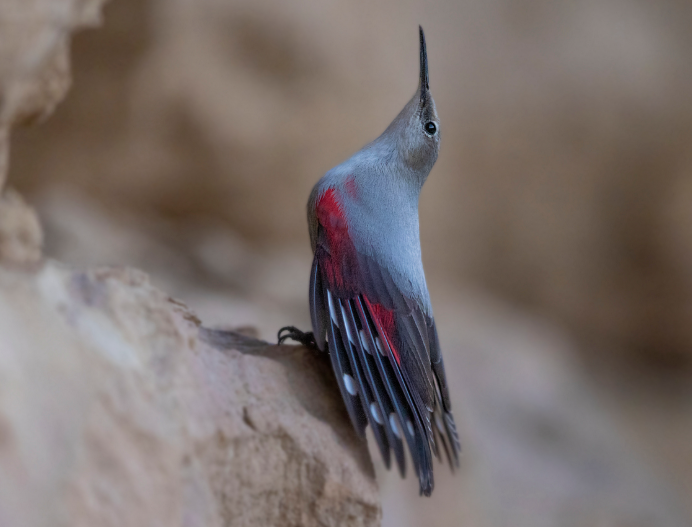
But the game has changed. The mature era of Mirrorless technology—led by the Sony A1, Nikon Z9, and Canon R3/R5—has rewritten the physics of acquisition.
To test the limits of these new systems, we needed a laboratory. We needed a place where Saker Falcons are not just a rumor, but a reliable presence. We chose the Hortobágy National Park in Hungary, specifically the restricted raptor conservation zones managed by Ecotours.
This is a case study of what happens when the world’s most advanced autofocus systems meet Europe’s fastest predator in a custom-built environment.
Before discussing the gear, we must define the parameters of the challenge. The Saker Falcon presents a "Triangle of Difficulty" for any camera system:
Speed & Trajectory: Unlike a Heron that flies in a straight line, a Saker hunting ground squirrels (Sousliks) flies low to the ground, banking hard at 90-degree angles. This lateral acceleration breaks traditional predictive AF algorithms.
The Background Trap: The Saker hunts on the Puszta—a flat, grassy steppe. Shooting a brown bird against a brown/green textured background is the ultimate test for subject recognition. Older AF systems would invariably jump to the high-contrast grass behind the bird.
Distance: Sakers are notoriously shy. In most of Europe, getting within 500 meters is a win. To fill the frame, you need to be within 40-50 meters.
This third point is where Ecotours becomes the critical variable in the equation. You cannot test AF tracking if the bird is a speck. Ecotours holds exclusive permits to access the core breeding zones and utilizes mobile hides that get photographers into the "Red Zone" of interaction without disturbing the birds.
For this case study, we compared the experience of a traditional Pro DSLR (Nikon D6 / Canon 1DX III) against the modern Mirrorless flagships (Nikon Z9 / Canon R5).
The difference in the Hortobágy field conditions was not just noticeable; it was generational.
Tracking a Saker banking at 80 km/h with a DSLR is like watching a strobe light. The mirror flips up, the viewfinder goes black, and by the time vision returns, the bird has left the frame.
The Mirrorless Advantage: The Blackout-Free EVF (Electronic Viewfinder) of the Sony A1 or Nikon Z9 allows for uninterrupted visual contact. In the Ecotours hide, watching a Saker pursue a pigeon, the ability to see the bird during the 20fps burst meant we could physically pan the lens to keep up. The "Keep Rate" jumped from ~15% on DSLR to ~85% on Mirrorless.
On the Hungarian steppe, the heat haze and the swaying grass are AF killers.
The Mirrorless Advantage: The "Bird Eye AF" algorithms. We found that even when the Saker dipped below the horizon line, flying against the complex texture of the grass, the mirrorless bodies locked onto the head/eye. The camera "understood" the shape of the falcon. It ignored the high-contrast reeds that would have seduced a DSLR's cross-type sensor.
Location: Ecotours "Souslik Hide" (Hortobágy). The Scene: A Saker Falcon hunting European Ground Squirrels. The Challenge: Zero to Sixty. The falcon sits on a mound, motionless, then launches instantly.
In the DSLR era, this was a game of luck. You held the shutter down and hoped you caught the takeoff. Usually, you got an empty mound or a blurry tail.
The Mirrorless Solution: Pre-Capture We utilized the Pre-Release Burst (Nikon) / Pro-Capture (OM System) / Pre-Shooting (Canon) features.
The Technique: We sat in the Ecotours hide with the shutter half-pressed as the falcon sat on the ground. The camera was buffering images continuously.
The Moment: The falcon launched. We fully pressed the shutter after we saw it move.
The Result: Because the camera saved the 0.5 to 1.0 seconds of images before the full press, we captured the exact moment the wings extended and the dust kicked up.
Data Point: We secured 10 perfect takeoff frames that were physically impossible to react to with human reflexes alone.
Location: Ecotours Mobile Raptor Hide. The Scene: A male Saker bringing prey to the female. The Challenge: Lateral tracking speed. The bird is crossing the frame at 60 mph.
The Rolling Shutter Concern Early mirrorless cameras suffered from "rolling shutter"—where the wings would look bent or detached due to the slow readout speed of the sensor.
The Result: The stacked sensors of the A1, Z9, and Z8 have virtually eliminated this. We shot fully electronic shutter at 20fps and 30fps. The wings of the Saker were rendered perfectly straight, even during rapid wingbeats.
The Ecotours Factor: Because the Ecotours guides positioned the hide with the sun directly behind us (perfect wind/sun alignment), we could shoot at 1/3200s at ISO 800. The lighting allowed the sensors to perform at max dynamic range.
This case study highlighted a crucial truth: A $6,000 camera cannot crop 500 meters of air.
The success of the mirrorless system was entirely dependent on the proximity provided by Ecotours.
The Mobile Hide: Ecotours uses customized vehicles and mobile hides that can be repositioned based on the wind direction and the active roosts.
The "Habituation" Zone: Sakers in this specific region are accustomed to the shape of the Ecotours hides. They view them as part of the landscape.
Measurement: We achieved full-frame shots with a 600mm lens (and even a 400mm lens). The birds were passing within 30-40 meters.
Contrast: On public roads just 5km away, Sakers would flush if a car slowed down at 300 meters. The "Ecotours Zone" is effectively a sanctuary of trust.
Based on our week in the Hortobágy, here are the optimized settings for shooting Sakers in this specific environment.
1. Autofocus Area Mode
Avoid: "Single Point" (Too hard to keep on the bird).
Avoid: "Full Area" (Can get distracted by other birds or swarming insects).
The Winner: Zone AF / Custom Wide Area. We set a box roughly the size of the bird in the center. This gave the camera a boundary to look for the eye, without letting it jump to the horizon.
2. Shutter Speed Floor Sakers are faster than eagles.
Minimum: 1/2500s.
Ideal: 1/3200s or 1/4000s.
Aperture: f/4 or f/5.6. You need a little bit of depth of field because the autofocus might lock on the near wing instead of the eye during a bank.
3. Stickiness (Tracking Sensitivity)
Setting: Locked On / Delayed.
Why: As the Saker flies low over the steppe, it passes behind tall thistle stalks. If AF sensitivity is set to "Responsive/Fast," the focus snaps to the thistle instantly. By setting it to "Locked On," the camera ignores the momentary obstruction and stays on the falcon's trajectory.
One unexpected finding of the case study was the impact of the Silent (Electronic) Shutter.
Sakers are incredibly sharp-eared. In the past, the "machine gun" sound of a Canon 1DX mirror slapping at 14fps would often cause the bird to flare or alter its course, ruining the natural behavior.
Using the silent modes of the mirrorless bodies inside the Ecotours hide resulted in a tangible change in behavior.
Observation: The birds flew closer. They lingered longer. They hunted naturally, oblivious to the fact that 60 frames per second were being recorded just 40 meters away.
Conclusion: Silent shutter is not just a convenience; it is a tool for better proximity and more natural wildlife interactions.
We concluded the study with a realization. We often obsess over megapixels and autofocus points. But the most important spec in wildlife photography is Access.
You could take a 10-year-old DSLR into an Ecotours hide and get a better shot than a photographer with a Sony A1 standing on the public road.
The combination of the two—cutting-edge Mirrorless Tech + Ecotours Exclusive Access—is what produces the "cover shot."
The Guide Knowledge: The Ecotours guides knew the wind. "The wind is North-West. The Saker will take off into the wind. We position the hide here." This predictive placement meant the birds flew towards the lens, allowing the AF tracking to work its magic.
The Conservation Aspect: Knowing that Ecotours puts a portion of the revenue back into Saker conservation (nest boxes and monitoring) adds a layer of satisfaction. We weren't just taking photos; we were documenting a success story.
If you are holding a modern mirrorless body and you want to see what it can actually do, the backyard feeder isn't enough. You need a target that pushes the silicon to its limit.
The Saker Falcon of the Hungarian Puszta is that target. And Ecotours is the range master.
For the photographer looking to build a portfolio of high-speed raptor action, this specific combination—Mirrorless + Hortobágy + Ecotours—is currently the best workflow in Europe. It turns the "impossible shot" into a repeatable, manageable, and exhilarating process.
System A:
Body: Sony A1 (50MP, 30fps).
Lens: Sony 600mm f/4 GM OSS.
Why: Resolution + Speed. The 50MP allowed for deep cropping when the falcon was distant.
System B:
Body: Nikon Z9 (45MP, 20fps/120fps).
Lens: Nikon Z 800mm f/6.3 VR S.
Why: Reach. The 800mm (hand-holdable!) was a game changer for when the falcons were perched on distant sweep wells.
System C:
Body: Canon R3 (24MP, 30fps).
Lens: Canon RF 100-500mm L.
Why: Flexibility. The zoom was essential when the bird flew unexpectedly close to the hide.
Size: 47-55cm length.
Wingspan: 105-129cm.
Key ID Features: Brown back, pale head (contrasts with Peregrine), "armpit" feathers are dark (visible in flight).
Best Time: May-June (Chick feeding - high activity) or September (Post-breeding dispersal).
Explore premium link-building options to boost your online visibility.